

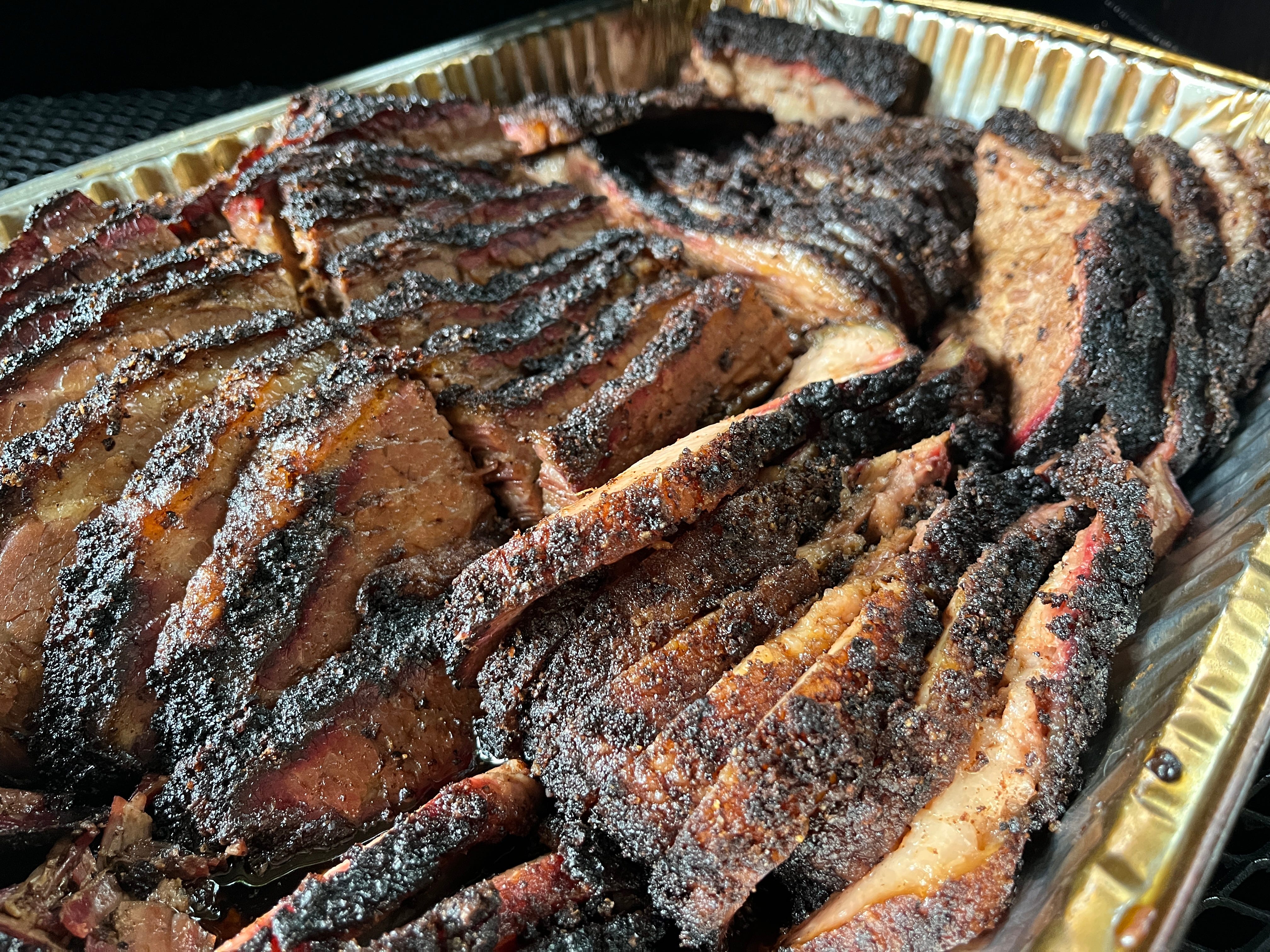
Brisket is the king of Texas BBQ — and rightfully so. The heaping slab of beef is full of muscle and fat that, when cooked correctly, bursts with a beautiful blend of bark, smoke, and seasonings.
For years, brisket remained an enigma to me, regardless of how many I cooked or the countless YouTube videos I watched from my favorite pitmasters. I wanted to know all the secrets about smoking a mouth-watering, perfectly rendered, and beautifully seasoned brisket.
I remember back in my teens I threw a BBQ with my friends. Wanting to impress, I bought a brisket. I knew it was a tough cut of meat, so I tossed it in the oven with some salt and pepper, beef stock, onions, garlic, and carrots, and let it slow cook for five hours before I finished it on the grill. Six hours of cook time was plenty, I thought.
It was a total and utter failure.
There was no bark to be seen. Hell, I didn’t know what bark on brisket was. The slices took minutes to chew. They tasted like a bland hamburger you’d get on burger day in elementary school. I was so embarrassed by the results that I threw it away and made burgers and hot dogs instead — always a safe option, yet not anything I’d qualify as a barbecue.
Through years’ worth of trial, error, and — yes — countless more failures, I’ve learned what truly makes a great brisket that’s worthy of its Texas BBQ throne.
I’m happy to share some tips I’ve picked up along the way:
Focus less on temp for the first four hours and really blast your brisket with smoke to develop your bark. (That said, keep your smoker temp between 200-230 degrees).
Begin spritzing around the 4-hour mark and gradually increase the heat to 250 degrees and maintain temp.
Place in a foil boat instead of wrapping once the brisket probes between 160-165 degrees. You can learn more about the foil boat method here. I really like this method because it maintains a great bark on top of the brisket while allowing you to retain its juices. Those juices help the less-fatty flat section stay moist, plus the juices are wonderful to drizzle over your finished brisket.
After putting in a boat, gradually increase temp to 275 degrees and maintain until the brisket feels like you’re sticking the probe in soft butter (about 200-205 degrees). Try and focus more on feel than temp.
Pull off the smoker, allow to cool to 150 degrees on your countertop, and either slice and serve immediately or place in a warmer until ready to eat. Allowing your brisket to rest allows all those wonderful juices to redistribute throughout and makes for a much better finished product. I highly recommend resting.
Now, when I hear from our happy customers that our brisket was among the best they’ve ever had, I can’t help but smile and be grateful for all of those years of trial and error that ultimately led to Bourbon Brothers BBQ and where we are today.
Smoke on, y’all!
Share Your Stories
I’d love to hear from y’all. What is the best brisket you’ve ever made — how did you do it, what secrets can you share? What about the worst brisket ever — what went wrong, what did you learn from it?
Shoot me an email or let me hear from you on Facebook or Instagram. I’ll pick a winning story to share in next week’s newsletter, plus I’ll throw in a free 2-pound vacuum-sealed pack of Bourbon Brothers BBQ brisket for you.
Cheers! 🍻